Hoshiimo: Japan’s Traditional Dried Sweet Potato from Ibaraki
Hoshiimo: Japan’s Traditional Dried Sweet Potato from Ibaraki
Japan has many famous sweets. Some are colorful and elegant, like wagashi served with matcha. Others are modern and fashionable, like cakes, parfaits, and convenience-store desserts. But there is another kind of Japanese sweet that is much quieter. It is simple, local, and made almost entirely from the natural sweetness of the land. One of the best examples is hoshiimo, Japanese dried sweet potato.
At first glance, hoshiimo may look too plain to be called a sweet. It is not covered in sugar or filled with cream, and it does not sparkle in a glass case. It is simply sweet potato—steamed, sliced, and dried. But that simplicity is exactly its charm. Hoshiimo is naturally sweet, gently chewy, and deeply comforting. It is a traditional local sweet that has been loved in Japan for generations, especially in the coastal areas of Ibaraki Prefecture.
What Is Hoshiimo?
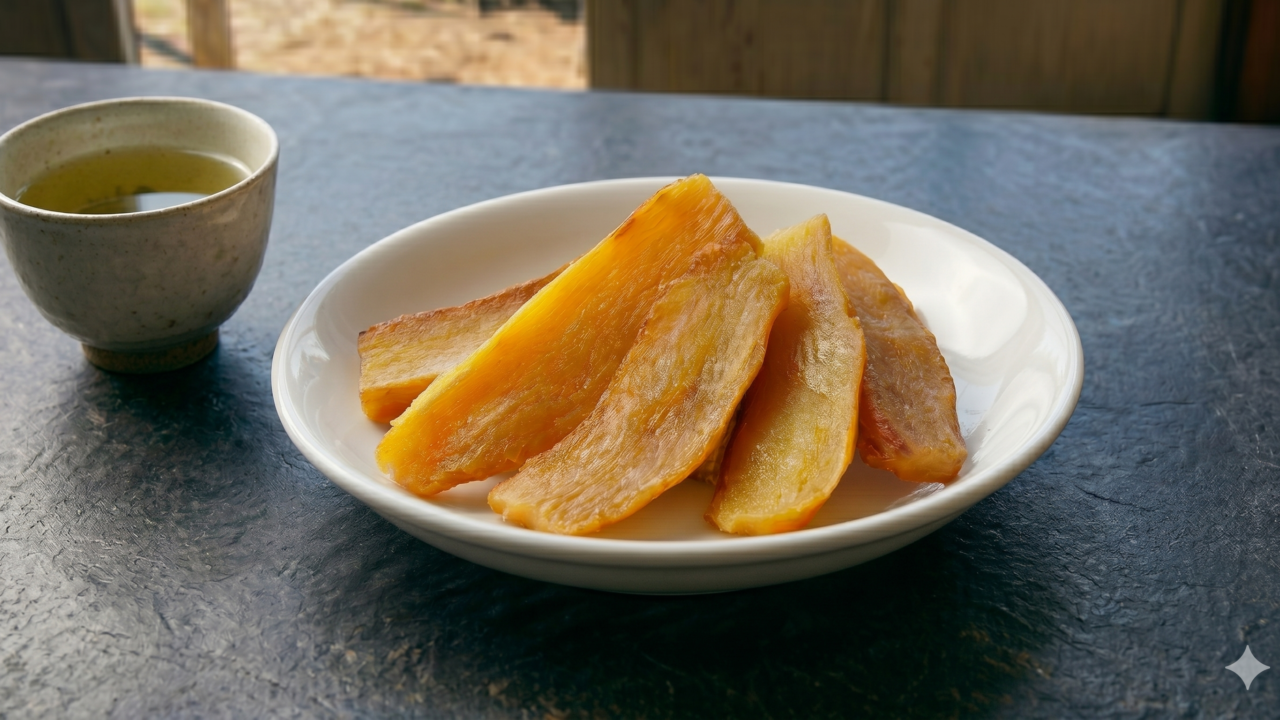
Hoshiimo literally means “dried potato” in Japanese, though it specifically refers to dried sweet potato. The basic process involves steaming, peeling, slicing, and drying the potatoes. As the moisture slowly leaves the potato, the natural sugars become more concentrated, resulting in a golden, chewy, and softly sweet snack.
Unlike many modern sweets, hoshiimo does not need added sugar; its sweetness comes from the vegetable itself. For readers outside Japan, the closest comparison might be dried fruit, but hoshiimo is earthier, softer, and more filling than raisins or dried apricots. It feels less like a candy and more like a quiet, nourishing snack, best enjoyed during a slow afternoon with a warm cup of green tea.
A Rare Local Sweet from the Coastal Belt
Hoshiimo is strongly associated with Ibaraki Prefecture, Japan’s leading producer. However, the heart of this production is not the entire prefecture, but a specific coastal region. According to official food information and the Ministry of Agriculture, Forestry and Fisheries (MAFF), the central production area consists of Hitachinaka City, Tokai Village, and Naka City.
This region’s well-drained volcanic-ash soil, salty sea breezes, and long, sunny winter days with strong temperature variations provide the perfect environment for hoshiimo. Because the quality depends so heavily on this specific geography, high-quality hoshiimo is considered a rare local food rather than a generic mass-produced snack. For visitors, this humble, rural sweet feels almost luxurious because it carries the taste of such a specific piece of land facing the Pacific.
A Short History of Hoshiimo
Today, hoshiimo is inseparable from Ibaraki, but its story began elsewhere. The origin of dried sweet potatoes in Japan is often traced to Shizuoka Prefecture. Later, the technique reached Ibaraki and expanded through the efforts of figures like Terunuma Kantaro, Yuasa Toshichi, and Koike Kihei in the Hitachinaka area.
Hoshiimo became a local industry because the method perfectly matched the land. The coastal climate, winter winds, and local agricultural skills converged to turn a basic preserved food into a regional specialty. It is more than just dried potato; it is climate, labor, and local memory turned into something sweet.
How Hoshiimo Is Made
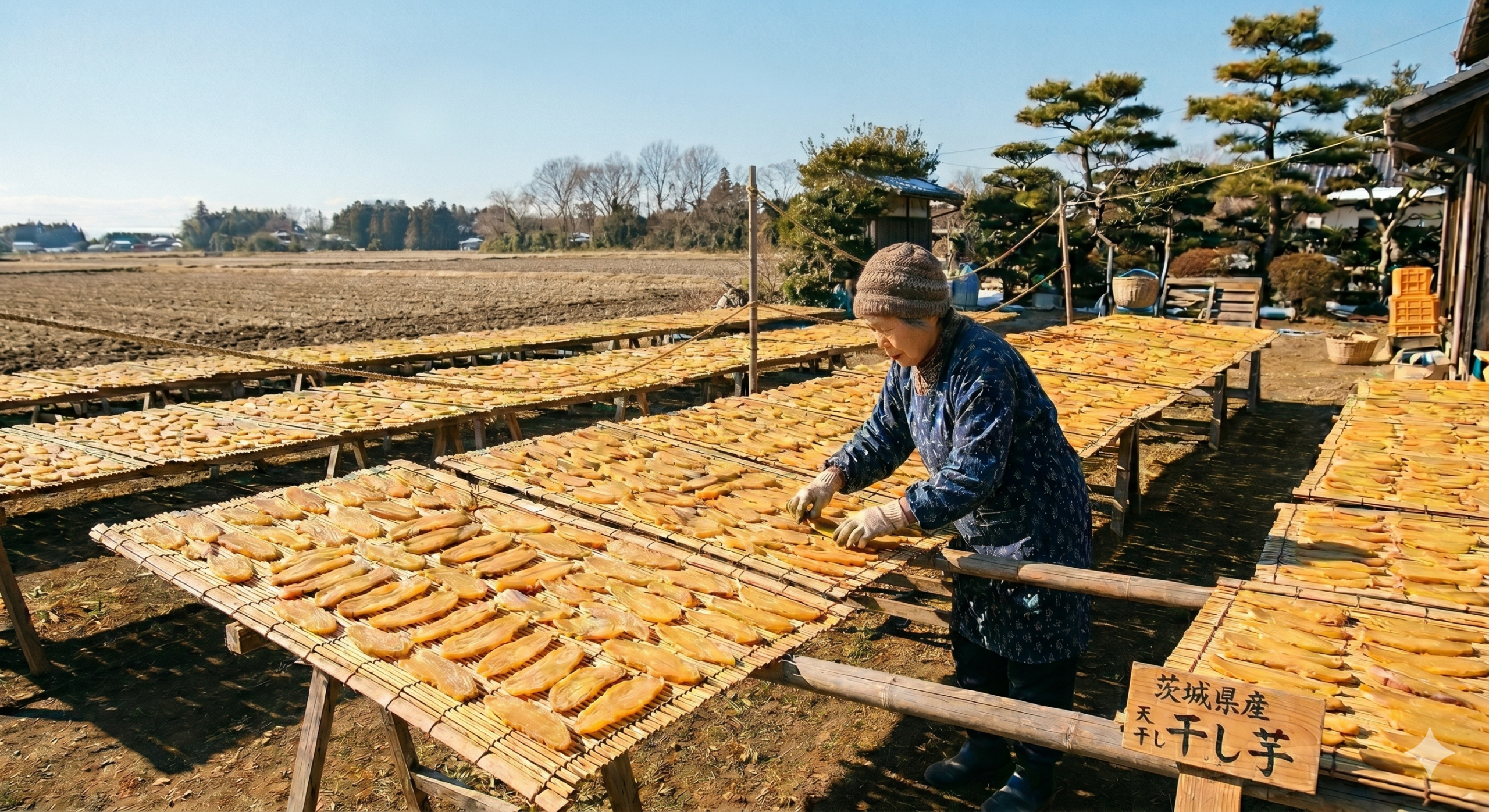
The making of hoshiimo looks simple, but achieving the right balance requires great care. First, sweet potatoes are selected and steamed until soft. They are then peeled and sliced—a process that clearly expresses both the quality of the potatoes and the skill of the processor.
The most critical part is the drying. Traditionally, the slices are dried slowly in the winter air. The sun and wind must remove the moisture precisely: if it dries too much, it becomes hard; if not enough, it won’t keep. The best hoshiimo has a perfect balance—sweet but not heavy, and chewy but not tough.
From Dry and Firm to Soft and Moist
In the past, hoshiimo was known as a firm, dry snack with a nostalgic, concentrated flavor. While this older style still has its fans, softer and moister types have become especially popular in recent years. These newer styles are tender, glossy, and rich in natural sweetness.
This shift marks hoshiimo’s evolution from a simple preserved winter food into a premium local sweet. It is now often sold in elegant packaging as a gift or a healthy snack, and it is even being incorporated into Western-style desserts.
Why Hoshiimo Is Loved
Hoshiimo has a wide fan base in Japan, ranging from children to the elderly. It is particularly popular for its gentle, non-aggressive sweetness. Without the richness of cream or butter, it remains satisfying without feeling artificial.
The texture also encourages mindfulness; you don’t just finish it in a second—you chew it and taste the sweetness as it develops gradually. Emotionally, hoshiimo feels safe and homemade. It is connected to the warmth of family and winter life, serving as a wholesome snack for some and a nostalgic memory for others.
Hoshiimo in Modern Sweets
Traditional hoshiimo is no longer eaten only by itself. Its natural sweetness and dense texture make it a versatile ingredient for modern desserts. It can now be found in cakes, pies, cookies, puddings, and ice cream. MAFF notes that it is particularly well-suited for pound cake and chiffon cake batters. This adaptability is how the culture survives; a rustic, old-fashioned food remains relevant by finding new forms in modern cafés and gift shops.
Visiting the Home of Hoshiimo
The hoshiimo region is a beautiful destination for travelers. In Hitachinaka, visitors can explore Hitachi Seaside Park, famous for the blue nemophila flowers that carpet Miharashi Hill in spring. Nearby, the Nakaminato Fish Market attracts over a million visitors annually with its fresh seafood. A trip to this area allows visitors to enjoy the scenery and seafood before taking home hoshiimo as a local souvenir.
Where to Buy: A Note on Seasonality
If you want to buy hoshiimo in its home region, the best way is to visit local farm shops and direct-sales stands, such as the Nagasuna Farmers Market “Kokosuna” along National Route 245 in Hitachinaka.
However, visitors must keep the season in mind. Hoshiimo is not a fresh product available year-round. The peak production and shipping season is winter, typically from November or December through mid-March. While some inventory may be available online or in shops later, the best time to find fresh, local hoshiimo at roadside stands is between December and February. This seasonality is part of its charm—hoshiimo belongs to the cold, dry air of winter.
A Quiet Sweet with a Deep Local Story
Hoshiimo is a quiet sweet. It does not shout, sparkle, or try to be fashionable. Yet, it has survived because it answers a deep human desire for something naturally sweet, comforting, and connected to the land.
While sushi, ramen, and matcha are more famous internationally, hoshiimo reveals another side of Japanese food culture. It shows how a simple agricultural product can become a local identity and how preservation can be turned into a premium pleasure. Sometimes, the most memorable sweets are the quietest ones. Hoshiimo is one of them.